
What Is PRP and How Does It Work? A Complete Guide to Platelet-Rich Plasma
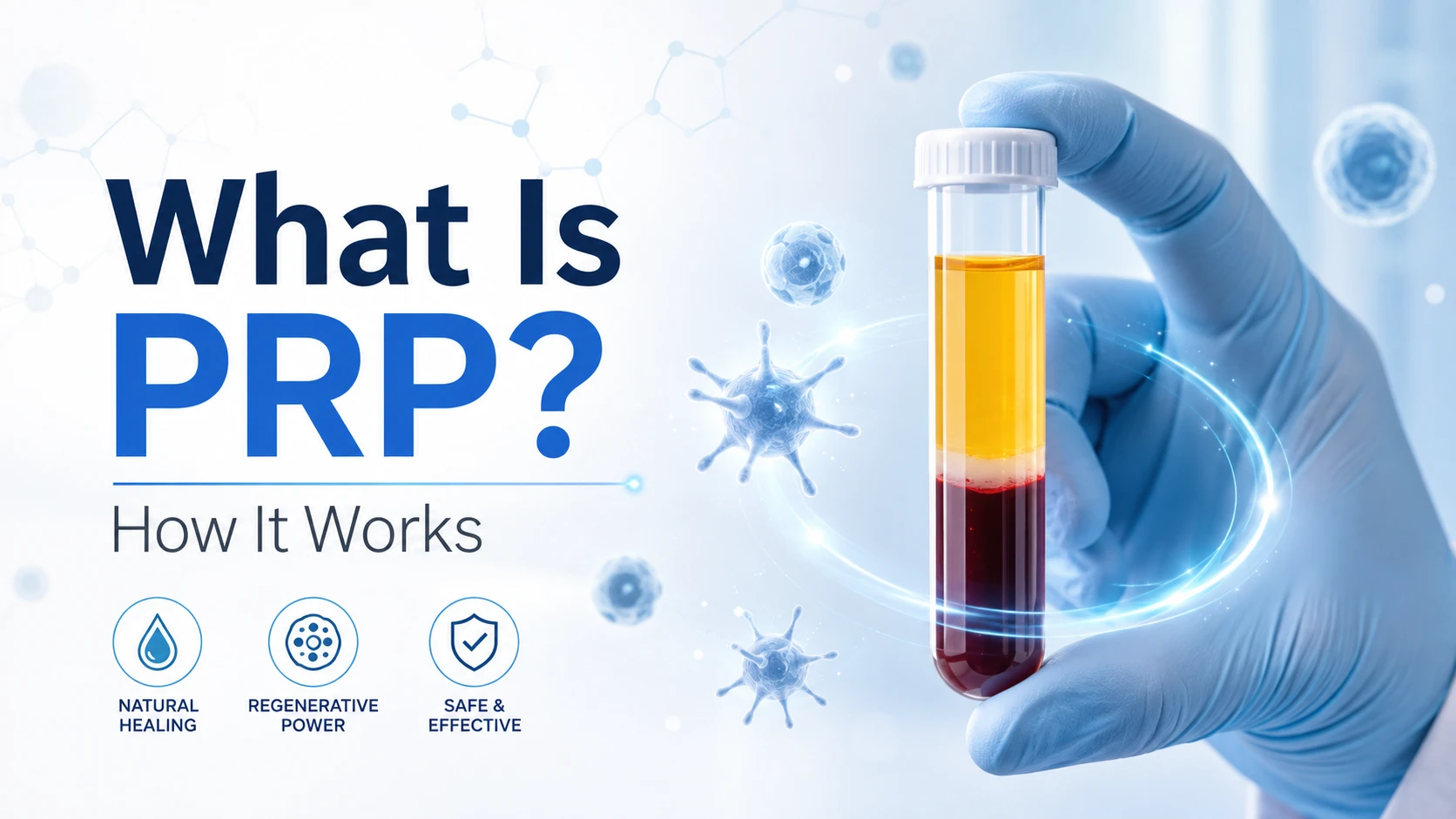
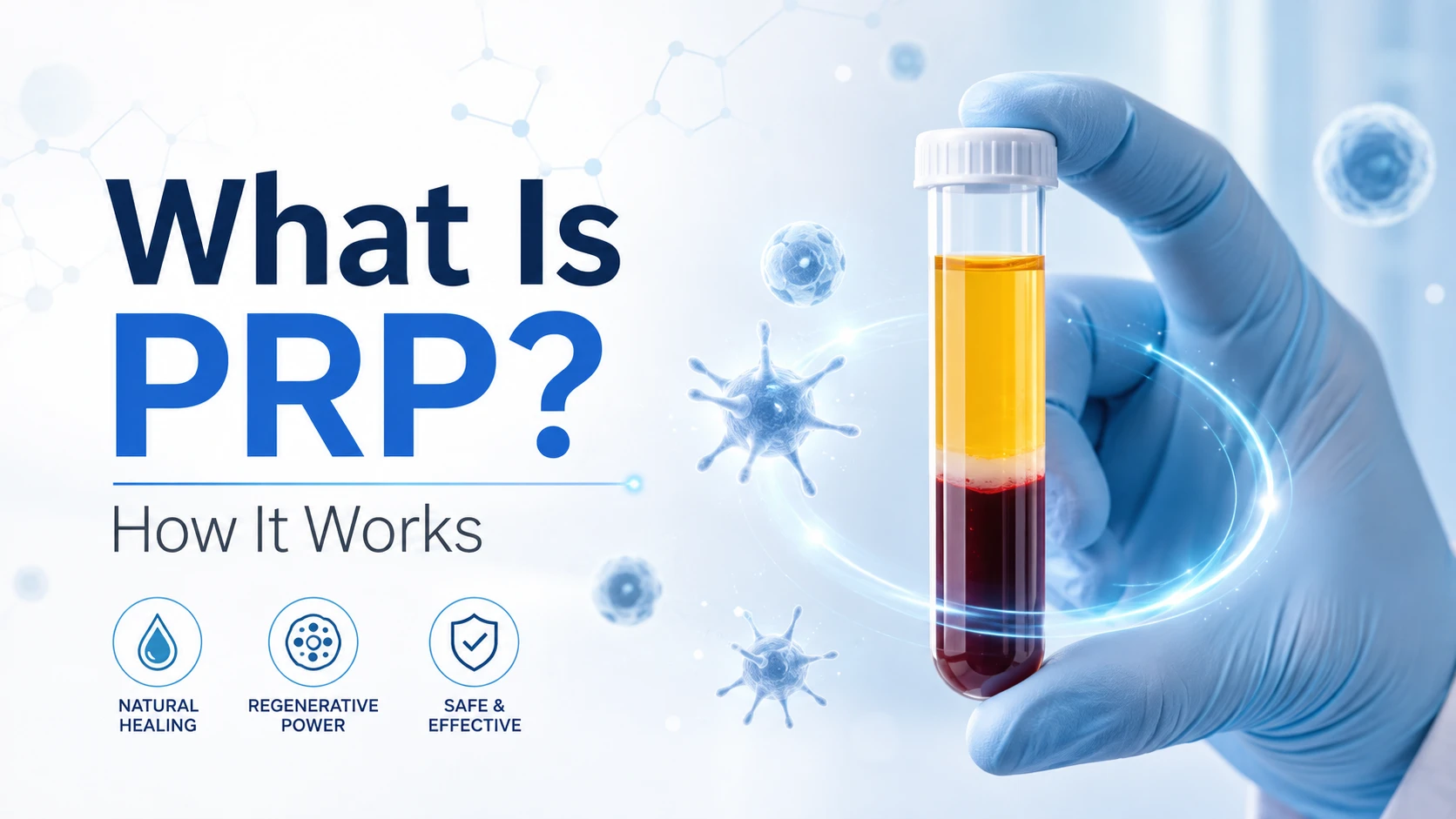
Platelet-rich plasma, commonly known as PRP, is a concentrated preparation made from a person’s own blood. It contains a higher concentration of platelets than is normally found in circulating blood.
Platelets are best known for helping the blood clot after an injury. However, they also contain biologically active proteins, signaling molecules, cytokines, and growth factors involved in inflammation, tissue repair, blood-vessel formation, and wound healing. PRP therapy is designed to concentrate these components and apply them to a targeted area under the direction of a qualified healthcare professional.
PRP has been investigated and used in several areas of medicine, including:
Orthopedics and sports medicine
Hair-loss management
Dermatology and aesthetic medicine
Dentistry and oral surgery
Wound management
Reconstructive procedures
Other regenerative-medicine applications
However, PRP is not a guaranteed cure. Its effectiveness varies according to the medical condition, patient, preparation system, platelet concentration, presence of white blood cells, injection technique, and treatment protocol. Research remains stronger for some applications than for others.
What Does PRP Mean?
PRP stands for Platelet-Rich Plasma.
To understand PRP, it helps to understand the main components of blood:
Red blood cells
Red blood cells carry oxygen from the lungs to the tissues and return carbon dioxide to the lungs.
White blood cells
White blood cells are involved in immune responses and protection against infection.
Platelets
Platelets are small, nucleus-free cell fragments produced from megakaryocytes, mainly in the bone marrow. They participate in clot formation, but they also contribute to inflammation, immune signaling, blood-vessel responses, and tissue repair.
Plasma
Plasma is the liquid portion of blood. It carries cells, proteins, nutrients, hormones, electrolytes, and other substances throughout the body.
PRP is the portion of plasma prepared to contain a platelet concentration above the person’s baseline blood level. There is no single universal composition for every PRP product, which is one reason study results and clinical outcomes may vary.
How Does PRP Work?
PRP is intended to support the body’s natural healing response by delivering a concentrated mixture of platelets and other plasma components to a targeted location.
The process can be understood in several stages.
1. Platelet concentration
A small quantity of blood is collected from the patient into a suitable sterile collection system. The blood is then processed, usually by centrifugation, to separate its components according to their density.
The goal is to produce a plasma fraction containing a higher platelet concentration while controlling the quantities of red blood cells and white blood cells.
2. Platelet activation
Platelets may become activated when they contact damaged tissue, collagen, thrombin, calcium, or other activating signals.
Following activation, platelets change shape and release substances stored inside their granules.
3. Growth-factor and cytokine release
Activated platelets release a range of biologically active molecules. Frequently discussed examples include:
Platelet-derived growth factor, or PDGF
Transforming growth factor beta, or TGF-β
Vascular endothelial growth factor, or VEGF
Epidermal growth factor, or EGF
Insulin-like growth factor, or IGF
Fibroblast growth factor, or FGF
These molecules may influence cell migration, cell proliferation, extracellular matrix production, collagen activity, blood-vessel formation, inflammatory signalling, and tissue remodelling. Their effects are complex and depend on the tissue environment, dose, timing, and other components within the PRP preparation.
4. Formation of a temporary biological environment
Plasma contains proteins such as fibrinogen, fibronectin, and other molecules that may help create a temporary matrix or scaffold around the treated area.
This environment can support cell attachment, communication, and tissue remodeling. It should not be interpreted as creating entirely new tissue by itself; rather, PRP is intended to influence the local biological healing environment.
5. Modulation of inflammation and repair
Inflammation is part of normal healing. PRP may influence inflammatory pathways rather than simply “switching inflammation off.”
The effect can vary according to the concentration of platelets, leukocytes and other components. For example, leukocyte-rich and leukocyte-poor PRP may behave differently in different tissues.
This is one reason why the type of PRP and the clinical indication should be selected by an appropriately trained medical professional.
How Is PRP Prepared?
Although individual devices and clinical protocols differ, PRP preparation generally follows these steps.
Step 1: Patient assessment
Before treatment, a qualified medical professional evaluates the patient’s condition, medical history, medications, blood-related risks, treatment objectives, and suitability for PRP.
Step 2: Blood collection
A measured volume of the patient’s own blood is collected using an appropriate sterile blood-collection system.
Depending on the preparation system, the collection tube may contain an anticoagulant to reduce premature clotting during processing.
Step 3: Centrifugation
The tube is placed in a compatible centrifuge and processed according to the validated instructions for the specific device, tube, rotor, sample volume, and intended PRP formulation.
Centrifugation separates blood components according to their physical properties. After processing, the sample may contain identifiable red-cell, plasma, platelet, white-cell, or separation-barrier fractions, depending on the system used.
There is no single centrifugation speed and time that is correct for every PRP tube or centrifuge. RPM alone is not sufficient for comparing protocols because the actual centrifugal force also depends on rotor radius. Healthcare professionals should follow the manufacturer’s validated instructions rather than applying an unverified universal setting.
Step 4: PRP collection
The platelet-containing plasma fraction is collected using an aseptic technique while minimizing contamination from unwanted layers.
The final volume and composition depend on the collection system and protocol.
Step 5: Application
The prepared PRP may be applied or injected into a targeted area by a qualified healthcare professional. Ultrasound guidance may be used for certain musculoskeletal injections to improve placement accuracy.
PRP preparation and administration should be performed only with suitable equipment, infection-control procedures, trained personnel, and patient-specific clinical judgment.
What Is Inside PRP?
PRP is not composed of platelets alone. Depending on the preparation method, it may contain different amounts of:
Platelets
Plasma
White blood cells
Red blood-cell contamination
Fibrinogen and other plasma proteins
Cytokines
Chemokines
Growth factors
Extracellular vesicles
Adhesion proteins and signaling molecules
PRP composition can therefore differ considerably between products and preparation systems. Modern research increasingly emphasizes the importance of reporting the final PRP composition rather than describing every preparation simply as “PRP.”
Different Types of PRP
PRP may be classified according to its platelet, leukocyte, red-cell, and fibrin content.
Leukocyte-rich PRP
Leukocyte-rich PRP contains a comparatively higher concentration of white blood cells.
It may produce different inflammatory and antimicrobial responses, but it may not be ideal for every tissue or condition.
Leukocyte-poor PRP
Leukocyte-poor PRP contains fewer white blood cells. It is sometimes selected when limiting a strong inflammatory response is considered desirable.
Platelet-rich fibrin
Platelet-rich fibrin, or PRF, is related to PRP but is not identical. PRF preparation generally creates a fibrin-rich matrix that may retain platelets and signaling molecules.
Activated and non-activated PRP
Some protocols apply PRP without deliberate activation, allowing contact with tissue to initiate activation. Other protocols use an activating agent based on the clinical purpose and preparation system.
No single PRP type is universally best. Selection should depend on the medical indication, current evidence, product instructions, and professional judgment.
What Are the Potential Applications of PRP?
PRP for hair loss
PRP is commonly investigated as an adjunctive treatment for certain forms of hair loss, particularly androgenetic alopecia.
The proposed mechanisms include effects on follicular cells, local blood-vessel signaling, growth-factor activity, and the hair-growth cycle. Some studies report improvements in hair density or thickness, but outcomes vary, and standardized treatment protocols are still developing. PRP should not be presented as a permanent or guaranteed cure for hair loss.
A proper diagnosis remains essential because hair loss can be associated with:
Genetic factors
Hormonal conditions
Nutritional deficiency
Thyroid disorders
Autoimmune disease
Scalp disease
Medication
Stress or recent illness
PRP may not address the underlying cause in every patient.
PRP for skin rejuvenation
In aesthetic medicine, PRP has been investigated for facial rejuvenation, skin texture, fine lines, acne scars, wound healing, and support following selected procedures.
Proposed effects include fibroblast activity, collagen-related signaling, extracellular-matrix remodeling, and vascular responses. Although studies report promising findings, treatment methods and outcome measures remain inconsistent.
PRP should not be advertised as producing permanent rejuvenation, instant regeneration, or guaranteed collagen formation.
PRP for joints and tendons
PRP has been studied for conditions such as:
Knee osteoarthritis
Tennis elbow
Tendinopathy
Plantar fasciitis
Selected ligament injuries
Selected muscle injuries
Some sports-related injuries
Evidence differs significantly by condition. Some patients may experience improvement in pain or function, but study quality, preparation methods, treatment schedules, and follow-up periods vary.
Even where evidence appears promising, PRP is usually one element of a broader treatment plan that may include rehabilitation, exercise, weight management, activity modification, medication, or surgery.
PRP for wound healing
Because platelets participate in clotting and tissue repair, PRP has also been investigated for difficult wounds and selected surgical applications.
The results depend on the wound type, blood supply, infection status, metabolic health, treatment method, and overall patient condition. It should not replace necessary infection management, vascular assessment, diabetic control, debridement, or standard wound care.
PRP in dentistry
PRP and related platelet concentrates may be used or investigated in:
Oral surgery
Periodontal procedures
Bone-grafting procedures
Implant-related procedures
Soft-tissue healing
The exact product, preparation method, and application should be selected according to the procedure and available clinical evidence.
What Are the Possible Benefits of PRP?
Potential advantages may include:
It is autologous
Most clinical PRP is prepared from the patient’s own blood. This can reduce certain risks associated with donor-derived biological materials, although it does not eliminate risks related to collection, processing, contamination, injection, or inappropriate patient selection.
It delivers concentrated platelets locally
PRP allows a platelet-containing preparation to be placed at a selected treatment site.
It may support natural repair pathways
PRP uses components involved in normal clotting, signaling, and tissue-repair processes.
It can be performed as an outpatient procedure
Many PRP procedures do not require hospital admission, although the setting depends on the application and the patient’s medical condition.
Recovery may be relatively short
Some people return to normal activity quickly. However, pain, swelling, activity restrictions, and recovery time vary according to the treatment area and procedure.
Is PRP Safe?
PRP is often described as a treatment made from the patient’s own blood, but “autologous” does not mean completely risk-free.
Possible side effects or complications can include:
Pain during or after blood collection
Pain at the treatment site
Temporary swelling
Bruising
Bleeding
Redness
Local inflammation
Dizziness or fainting during blood collection
Infection
Injury to nearby nerves, blood vessels, or other structures
Temporary worsening of symptoms
Failure to achieve the expected result
Reactions to local anesthetics, activating agents, antiseptics, or other materials used during the procedure
Risks depend on the treatment site, procedure, equipment, sterility, practitioner experience, and patient’s medical condition. Additional risks may apply when PRP is combined with microneedling, surgery, medication, fillers, grafting materials, or other procedures.
Who May Not Be a Suitable Candidate for PRP?
Suitability must be determined by a qualified healthcare professional. Additional evaluation or postponement may be required for people with conditions such as:
Active infection
Infection at the intended treatment site
Significant platelet abnormality
Severe anemia
Certain bleeding or clotting disorders
Uncontrolled systemic illness
Some cancers or active cancer treatment
Unstable cardiovascular disease
Pregnancy, depending on the indication
Use of anticoagulant or antiplatelet medication
Known allergy to another substance planned for use during the procedure
Patients should not stop aspirin, anticoagulants, anti-inflammatory medicines, or other prescribed treatments without consulting the clinician who prescribed them.
Does PRP Work Immediately?
PRP does not usually produce an instant biological result.
Following treatment, local signaling and tissue remodeling may develop over several weeks or months. The response depends on:
The condition being treated
Duration and severity of the condition
Patient age and general health
Platelet number and function
PRP composition
Treatment technique
Number and spacing of treatment sessions
Rehabilitation and aftercare
Other medical treatments
For some applications, several sessions may be recommended. Maintenance procedures may also be considered, particularly for chronic or progressive conditions. Results are not necessarily permanent.
How Many PRP Sessions Are Needed?
There is no universal treatment schedule.
A healthcare professional may recommend one or more sessions depending on the diagnosis, treatment area, evidence, response to previous treatment, and product protocol.
Websites should avoid statements such as “three sessions are required for everyone.” A more accurate statement is:
The recommended number of PRP sessions varies according to the condition, patient, preparation method, and clinical response.
What Factors Affect PRP Quality?
PRP quality cannot be judged only by the color of the plasma or the stated tube volume.
Important factors include:
Patient’s baseline platelet count
Platelet recovery
Final platelet concentration
Final PRP volume
Red blood-cell contamination
Leukocyte concentration
Platelet activation during processing
Sterility
Anticoagulant type and ratio
Time between collection and application
Centrifugal force and processing time
Rotor radius and centrifuge characteristics
Tube and separation-system design
Handling and collection technique
Storage conditions, where applicable
Compliance with the manufacturer’s instructions
PRP-preparation methods remain highly variable, and better standardization and reporting are recurring priorities in clinical research.
RPM Versus RCF in PRP Preparation
RPM means revolutions per minute. It describes how quickly the centrifuge rotor turns.
RCF means relative centrifugal force and is usually expressed as a multiple of gravity, such as ×g.
Two centrifuges operating at the same RPM can generate different RCF values when their rotor radii are different. Therefore, copying an RPM setting from another machine may not reproduce the same separation result.
PRP preparation should follow the validated parameters for the exact:
PRP tube
Anticoagulant system
Sample volume
Centrifuge model
Rotor type
Rotor radius
Intended final product
This is why universal online claims such as “all PRP must be centrifuged at one fixed RPM and time” can be misleading.
Is a Higher Platelet Concentration Always Better?
Not necessarily.
A preparation must contain enough functional platelets to achieve its intended biological purpose, but an extremely high concentration does not automatically produce a better clinical result.
Clinical response may depend on the interaction among:
Platelet concentration
Platelet activation
Leukocytes
Plasma proteins
Fibrin
Red-cell contamination
Treatment volume
Tissue type
Patient factors
The ideal composition may differ between scalp, skin, tendon, cartilage, bone, and wound applications.
PRP Versus Stem-Cell Therapy
PRP and stem-cell treatments are not the same.
PRP is primarily a platelet-containing plasma preparation derived from blood. It contains platelets and signaling molecules but should not be described as a stem-cell product.
Stem-cell or cell-based therapies involve different types of cells, collection methods, processing requirements, biological mechanisms, risks, and regulatory considerations.
Claims that PRP “creates stem cells” or is automatically equivalent to stem-cell therapy are scientifically inaccurate.
PRP Versus PRF
PRP and PRF are related blood-derived preparations, but they have important differences.
PRP
Usually contains a liquid plasma fraction enriched with platelets
Often uses an anticoagulant during collection
May remain liquid until activated or applied
Composition depends on the preparation system
Usually contains a liquid plasma fraction enriched with platelets
Often uses an anticoagulant during collection
May remain liquid until activated or applied
Composition depends on the preparation system
PRF
Usually forms a fibrin-rich matrix or clot
Often uses a different preparation approach
Can retain platelets and other cellular or signaling components within the fibrin network
May release biological molecules differently over time
Usually forms a fibrin-rich matrix or clot
Often uses a different preparation approach
Can retain platelets and other cellular or signaling components within the fibrin network
May release biological molecules differently over time
The correct option depends on the clinical application and professional judgment.
What Should Patients Ask Before PRP Treatment?
Patients may consider asking:
What is my exact diagnosis?
What evidence supports PRP for my condition?
What realistic improvement can I expect?
What alternatives are available?
How many sessions may be required?
What are the total costs?
What are the risks for my individual condition?
Who will prepare and administer the PRP?
Is the preparation system sterile and appropriate for its intended use?
Will imaging guidance be used where necessary?
What should I do before and after treatment?
How will treatment results be measured?
A responsible clinic should explain both the potential benefits and the uncertainty.
Important Limitations of PRP Research
PRP research can be difficult to interpret because different studies may use:
Different collection tubes
Different centrifugation systems
Different platelet concentrations
Different leukocyte levels
Different activation methods
Different injection volumes
Different treatment schedules
Different outcome measurements
Different follow-up periods
Different patient populations
A positive result from one PRP formulation cannot automatically be applied to every PRP product or every medical condition.
Recent reviews continue to call for better standardization, improved quality control, clearer reporting, and larger high-quality clinical trials.
Frequently Asked Questions About PRP
Is PRP made from the patient’s own blood?
Most clinical PRP is autologous, meaning it is prepared from the same patient who will receive it.
Is PRP a medicine?
PRP is a blood-derived biological preparation rather than a conventional pharmaceutical drug. Its regulatory status and permitted uses can differ according to the country, device, processing method, and clinical application.
Is PRP the same as plasma?
No. Ordinary plasma is the liquid portion of blood. PRP is a processed plasma fraction intended to contain an increased concentration of platelets.
Is yellow plasma always PRP?
No. Appearance alone cannot confirm platelet concentration, purity, sterility, leukocyte level, or clinical quality. Laboratory measurement and validated processing are more reliable than color alone.
Can PRP regrow all lost hair?
No. PRP may help selected patients with certain types of hair loss, but it does not guarantee complete hair regrowth. Patients with permanently destroyed or scarred follicles may respond differently.
Can PRP permanently remove wrinkles?
No. PRP may support skin-remodeling processes, but it should not be advertised as permanently eliminating wrinkles or reversing aging.
Can PRP rebuild damaged cartilage?
PRP may improve symptoms in some patients with selected joint conditions, but evidence does not support promising that it will completely regrow or permanently rebuild severely damaged cartilage.
Can PRP be prepared in any ordinary tube?
PRP should be prepared only with an appropriate sterile collection and processing system designed or validated for the intended purpose. Ordinary laboratory tubes may not provide suitable anticoagulation, separation, sterility, biocompatibility, or clinical safety.
Can one centrifuge setting be used for every PRP tube?
No. Processing conditions should match the tube, centrifuge, rotor, sample volume, and manufacturer’s validated instructions.
Is PRP treatment painful?
Patients may experience discomfort during blood collection and application. Pain varies according to the treatment location, needle technique, and use of local anesthesia.
How long do PRP results last?
The duration varies according to the condition, patient, and treatment plan. PRP results are not necessarily permanent, and additional treatment may be considered.
Conclusion
Platelet-rich plasma is an autologous blood-derived preparation containing concentrated platelets and a range of biologically active molecules.
After activation, platelets release growth factors, cytokines, and other signals that may influence inflammation, blood-vessel formation, cell activity, extracellular-matrix production, and tissue remodeling.
PRP has promising applications in hair restoration, dermatology, orthopedics, dentistry, wound care, and other areas. However, it is not a universal cure, and results vary substantially.
Safe and responsible PRP practice requires:
A correct diagnosis
Appropriate patient selection
A sterile and suitable preparation system
Validated processing instructions
Trained medical professionals
Realistic communication
Proper consent and follow-up
Evidence-based clinical judgment
Patients should consult a qualified healthcare professional to determine whether PRP is appropriate for their particular condition.
Medical Disclaimer
This article is provided for general educational and professional-information purposes only. It does not provide medical advice, diagnosis, treatment instructions, or a substitute for consultation with a qualified healthcare professional.
PRP collection, processing, injection, and clinical application must be performed by appropriately trained and authorized medical professionals using suitable sterile equipment and patient-specific clinical judgment.
Product availability, device classification, approved indications, and regulatory requirements may vary by jurisdiction.
About MAC Scientific
MAC Scientific supplies PRP-related tubes, laboratory consumables, centrifuge solutions, and selected aesthetic and regenerative-medicine products for professional use in Bangladesh.
Website: ms-bd.com
Phone and WhatsApp: 01312-699221
Email: macscientificbd@gmail.com
Address: 59, 2nd Floor, Rajanigandha Super Market, Kachukhet, Dhaka Cantonment, Dhaka-1206, Bangladesh
For professional and authorized use only.