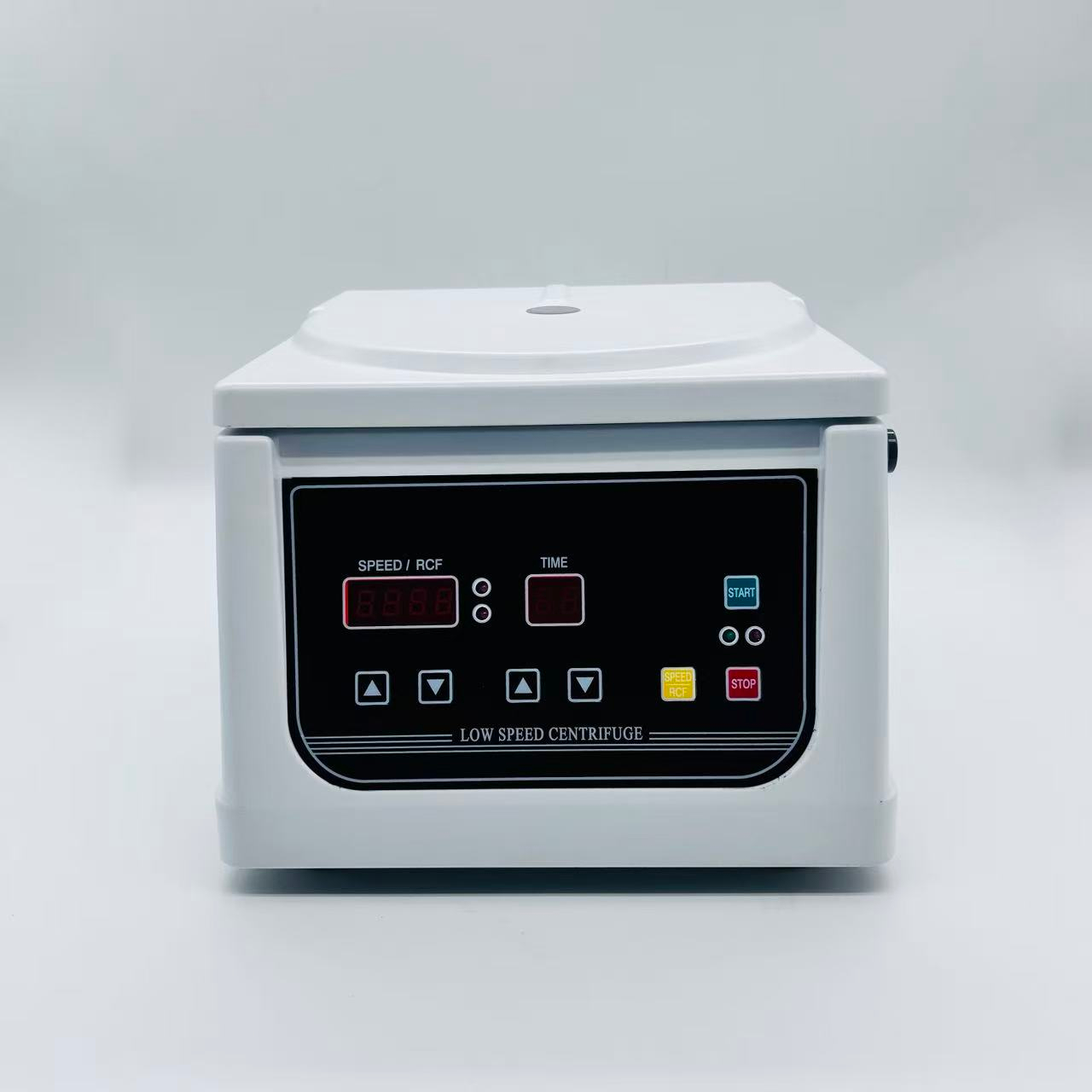
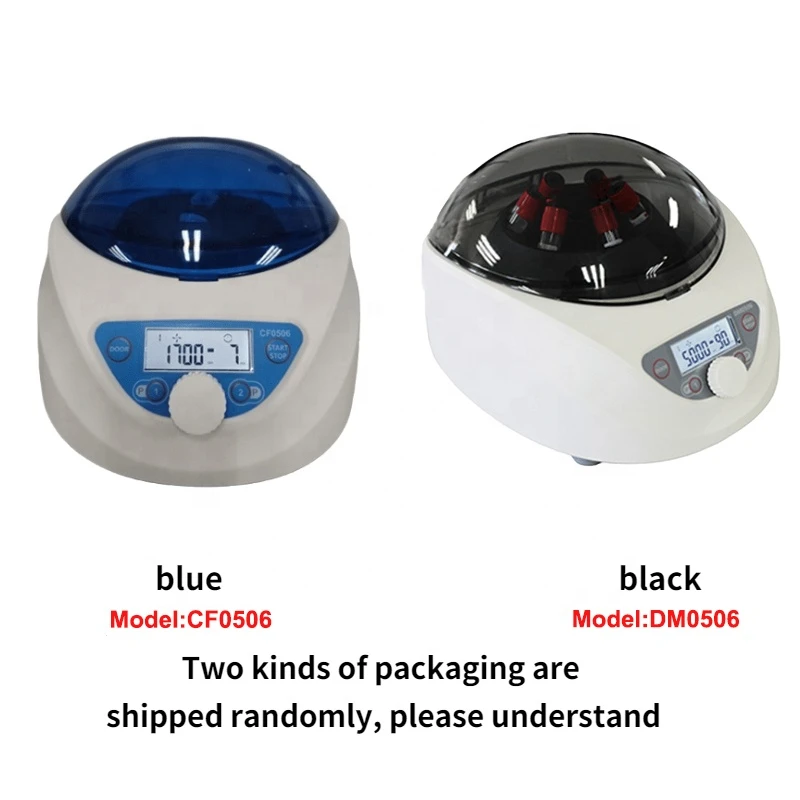

PRP & PRF Clinical Centrifuge Machine (DM0506) | 300–5000 RPM | LCD Display | Brushless Motor | CE & ISO Certified
Laboratory Centrifuge for PRP, PRF & GFC
Clinic Grade
Product
Delivery
Payment
Bangladesh
Delivery
Key Features
How to Use a Laboratory Centrifuge for PRP, PRF & GFC Preparation
Laboratory Centrifuge for PRP, PRF and Blood Sample Separation
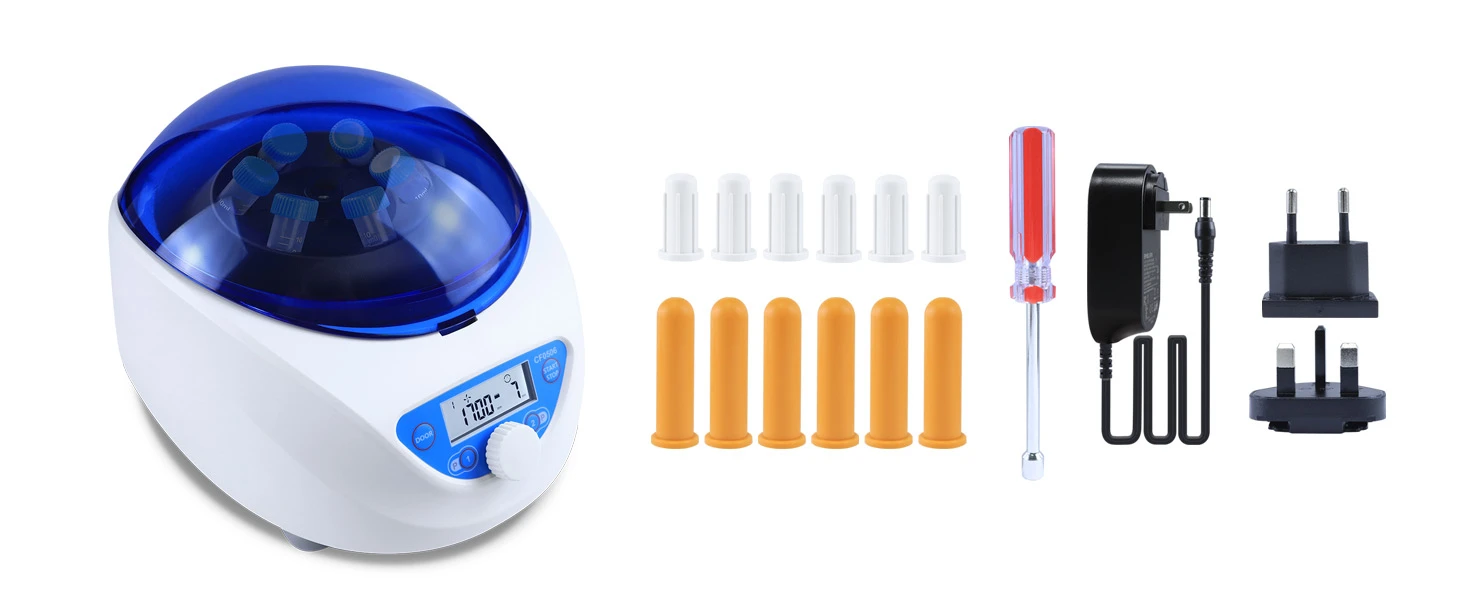
Our professional low-speed laboratory centrifuge is designed for controlled separation of blood and laboratory samples. It features a maintenance-free brushless DC motor, LCD display, programmable operation and a fixed-angle 6-place rotor compatible with 1.5–15 mL tubes.
It can be used in laboratory workflows involving PRP and PRF preparation when the selected tube, rotor, centrifugation force and processing protocol are validated for the intended application.
Important: Centrifugation settings are not universal. The same RPM can produce different centrifugal forces on different centrifuges because RCF depends on rotor radius. Always follow the centrifuge manufacturer's instructions, the blood-collection tube manufacturer's instructions and the validated clinical/laboratory protocol being used.
PRP Tube Setting
What Is PRP?
Platelet-rich plasma (PRP) is a plasma preparation containing a higher concentration of platelets than the original blood sample. PRP preparation commonly uses either a single-spin or double-spin centrifugation method.
Published recommendations demonstrate substantial variation between PRP protocols. One expert consensus recommends, for a double-spin manual method, approximately 100–300 × g for 5–10 minutes for the first spin and 400–750 × g for 10–17 minutes for the second spin.
PRP Double-Spin Reference Workflow
Step 1 — Blood collection
Collect the required blood volume into the appropriate validated blood-collection tube.
Step 2 — First centrifugation
Use a validated soft-spin protocol. A published reference range is:
100–300 × g | 5–10 minutes
The purpose of the first spin is to separate red blood cells from the plasma and platelet-containing fraction.
Step 3 — Layer identification
After centrifugation, the tube generally contains:
- Upper plasma layer
- Platelet/buffy-coat region
- Red blood cell layer
The exact appearance depends on the tube, anticoagulant, blood sample and centrifugation conditions.
Step 4 — Transfer
Using an appropriate sterile technique, transfer the desired plasma/platelet fraction according to the validated PRP protocol.
Step 5 — Second centrifugation
A published reference range is:
400–750 × g | 10–17 minutes
The second spin can concentrate platelets into a smaller plasma volume.
Step 6 — PRP collection
Carefully collect the required PRP fraction using the validated collection technique.
PRP Important Setting
Do not publish a fixed RPM such as “1500 RPM” as a universal PRP setting.
RCF is more reproducible than RPM because centrifugal force depends on rotor radius. The commonly used conversion is:
RCF = 1.118 × 10⁻⁵ × radius(cm) × RPM²
Therefore, the RPM required for a particular g-force must be calculated from the actual rotor radius of the centrifuge.
PRF Tube Setting
What Is PRF?
Platelet-rich fibrin (PRF) is a platelet concentrate containing a fibrin matrix. Unlike conventional PRP preparation, PRF protocols commonly use blood collected without an anticoagulant, with the blood processed promptly after collection.
Different PRF protocols produce different biological characteristics. Published research shows that rotor radius, tube design, rotor angle, RCF and centrifugation time all affect the resulting PRF.
L-PRF Reference Setting
A commonly reported L-PRF reference protocol is approximately:
~700 × g | 12 minutes
Some studies report approximately 2700–3000 RPM for 10–12 minutes, but RPM should not be transferred directly between centrifuge models because rotor radius differs.
PRF Workflow
- Collect blood into the validated PRF tube without anticoagulant when required by the protocol.
- Place the tubes in the centrifuge immediately according to the validated procedure.
- Balance the rotor carefully.
- Select the validated PRF RCF/RPM and time.
- Start centrifugation.
- Allow the rotor to stop completely before opening the lid.
- Identify the fibrin clot and plasma layers.
- Carefully remove the PRF clot according to the intended application.
A-PRF Reference Setting
Advanced PRF protocols generally use a lower centrifugal force than conventional L-PRF.
One published comparison evaluated:
~200 × g | 8 minutes
and reported differences in platelet distribution and growth-factor release compared with a higher-force L-PRF protocol.
Because A-PRF protocols vary by centrifuge and tube system, this should be treated as a literature reference rather than a universal machine preset.
Injectable PRF (i-PRF) Setting
Injectable PRF, or i-PRF, is a liquid platelet/fibrin preparation produced using a low-force, short centrifugation protocol.
A commonly reported reference protocol is:
~60 × g | 3 minutes
For one specific centrifuge with a particular rotor radius, 60 × g was equivalent to approximately 700 RPM. This RPM should not be copied to another centrifuge unless the rotor radius produces the same RCF.
i-PRF Workflow
- Collect blood into the specified tube.
- Use the tube immediately according to the validated protocol.
- Balance the centrifuge.
- Set the validated low RCF.
- Centrifuge for the validated short duration.
- Carefully identify the upper liquid PRF fraction.
- Collect the desired fraction using sterile technique.
GFC Setting — Important Information
What Does GFC Mean?
If GFC means Growth Factor Concentrate, there is no single universally accepted centrifuge setting that can safely be presented as a standard preset for every centrifuge.
Published GFC preparation methods can involve multiple processing stages, different blood volumes, platelet concentration steps, activation procedures and high-speed centrifugation. One described method uses approximately 382 × g for 15 minutes for an initial platelet-isolation step followed by approximately 2720 × g for 10 minutes, with additional processing stages. Another stage in that particular method uses very high centrifugal force that is beyond the capability of many low-speed laboratory centrifuges.
For this reason:
Do not advertise a universal “GFC = ___ RPM / ___ minutes” setting for this low-speed centrifuge unless you have a validated GFC protocol for this exact machine, rotor and tube system.
If by GFC you actually mean CGF (Concentrated Growth Factor), that is a different preparation method and commonly involves programmed changes in centrifugation speed rather than one fixed low-speed setting.
How to Operate the Centrifuge
1. Prepare the Samples
Use compatible tubes within the centrifuge's specified capacity.
This centrifuge supports tubes from approximately:
1.5 mL to 15 mL
2. Balance the Rotor
Place tubes symmetrically in the 6-place rotor.
For example, when using two tubes, place them opposite each other. Do not operate the centrifuge with an unbalanced rotor.
3. Check the Tubes
Inspect tubes for cracks, leakage or damage before centrifugation.
4. Close the Lid
Securely close the centrifuge lid before starting the run.
5. Select the Validated Program
Enter the appropriate:
- RCF or RPM
- Centrifugation time
- Program number, if applicable
6. Start the Run
Press START and allow the centrifuge to complete the programmed cycle.
7. Wait for Complete Stop
Never open the centrifuge while the rotor is moving.
8. Collect the Sample
Remove the tubes carefully and process the separated fractions according to the validated laboratory or clinical protocol.
PRP vs PRF vs i-PRF vs GFC
| Preparation | Typical form | Example literature reference | Important consideration |
|---|---|---|---|
| PRP | Liquid plasma concentrate | 100–300 × g, 5–10 min + 400–750 × g, 10–17 min for a double-spin reference | Protocol varies considerably |
| L-PRF | Solid fibrin clot | ~700 × g, 12 min | Tube and rotor affect result |
| A-PRF | Solid fibrin clot | ~200 × g, 8 min | Lower-force protocols are used |
| i-PRF | Liquid PRF | ~60 × g, 3 min | Requires appropriate tube and rapid processing |
| GFC | Growth-factor concentrate | No universal setting | Method and kit specific |
The literature emphasizes that PRP and PRF preparation is not standardized across all centrifuges, tubes and protocols.
Why RCF Is Better Than RPM for Protocols
RPM tells you how fast the rotor is turning.
RCF tells you the approximate centrifugal force applied to the sample.
Because rotor radius differs between machines, 2000 RPM on one centrifuge may not equal 2000 RPM on another centrifuge.
For professional product documentation, it is therefore better to state:
RCF (× g) + centrifugation time + rotor radius + tube type
rather than RPM alone.
Recommended Website Safety Note
For professional laboratory and clinical use only. Centrifugation parameters must be selected according to the validated protocol, centrifuge manufacturer's instructions, rotor specifications, tube manufacturer's instructions and applicable local regulations. PRP, PRF, i-PRF and GFC preparation methods vary by device, tube, rotor geometry and intended application. The reference values on this page are provided for educational and technical information and are not a substitute for professional training or a validated clinical protocol.
Frequently Asked Questions
What centrifuge speed is used for PRP?
There is no single universal PRP RPM. Published recommendations include approximately 100–300 × g for 5–10 minutes for a first spin and 400–750 × g for 10–17 minutes for a second spin in a double-spin reference protocol.
What centrifuge speed is used for PRF?
A commonly reported L-PRF reference protocol is approximately 700 × g for 12 minutes, while lower-force A-PRF protocols around 200 × g for 8 minutes have also been studied.
What is the i-PRF centrifuge setting?
A commonly reported i-PRF protocol uses approximately 60 × g for 3 minutes. The corresponding RPM depends on the centrifuge rotor radius.
Can the same RPM be used on every centrifuge?
No. RPM does not account for rotor radius. The same RPM can generate different RCF values on different centrifuges.
Can this low-speed centrifuge prepare GFC?
It depends on the specific GFC method and validated protocol. Some published GFC methods require centrifugation forces substantially higher than those available on a low-speed centrifuge. Therefore, GFC should not be presented as a guaranteed application without validating the exact protocol, rotor and tube system.
Which tubes are compatible with this centrifuge?
The described rotor is compatible with 1.5–15 mL tubes, but the exact tube type, material, dimensions and maximum allowable RCF must always be checked before use.
Why is RCF important for PRP and PRF?
RCF provides a more reproducible description of centrifugal force because it accounts for rotor radius. This is particularly important when comparing PRP or PRF protocols between different centrifuge models.
Model: DM0506 / CF0506
Brand: WEIAI
Max Speed: 5000 RPM
Speed Range: 300–5000 RPM
Max RCF: 2350 × g
Display: LCD
Motor: Brushless DC Motor
Power Supply: AC 110V/220V, 50/60Hz
Dimensions: 300 × 240 × 180 mm
Weight: 5.2 kg
Package Size: 400 × 350 × 270 mm
Warranty: 1 Year
Certificates: CE, ISO, FCC, FDA, LVD (as applicable from supplier documentation)
1. Collect samples using appropriate sterile tubes.
2. Balance the rotor with equal-weight tubes opposite each other.
3. Insert tubes securely and close the lid.
4. Set RPM/RCF and timer as required.
5. Press Start to begin centrifugation.
6. Wait until the cycle completes and the lid unlocks automatically.
7. Remove samples carefully and continue processing according to your validated protocol.
Example Settings:
• PRP: 4000 RPM for 5 minutes
• PRF: 2700 RPM for 7 minutes
Note: These are example settings only. Always follow the validated protocol recommended by your laboratory, clinician, or tube manufacturer.
Customer Reviews
0.0
Frequently Asked Questions
Latest Reviews
You May Also Like